 FRANçAIS
 DEUTSCH
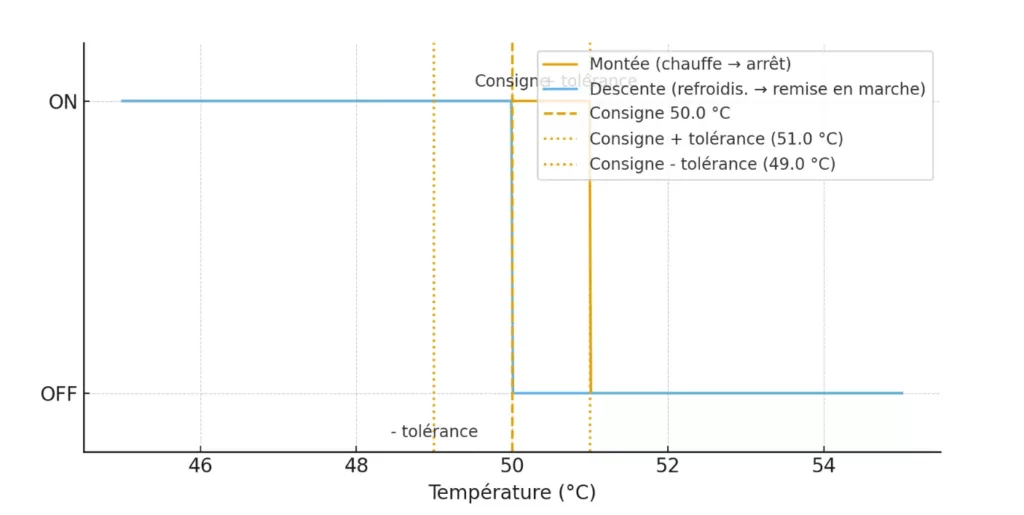
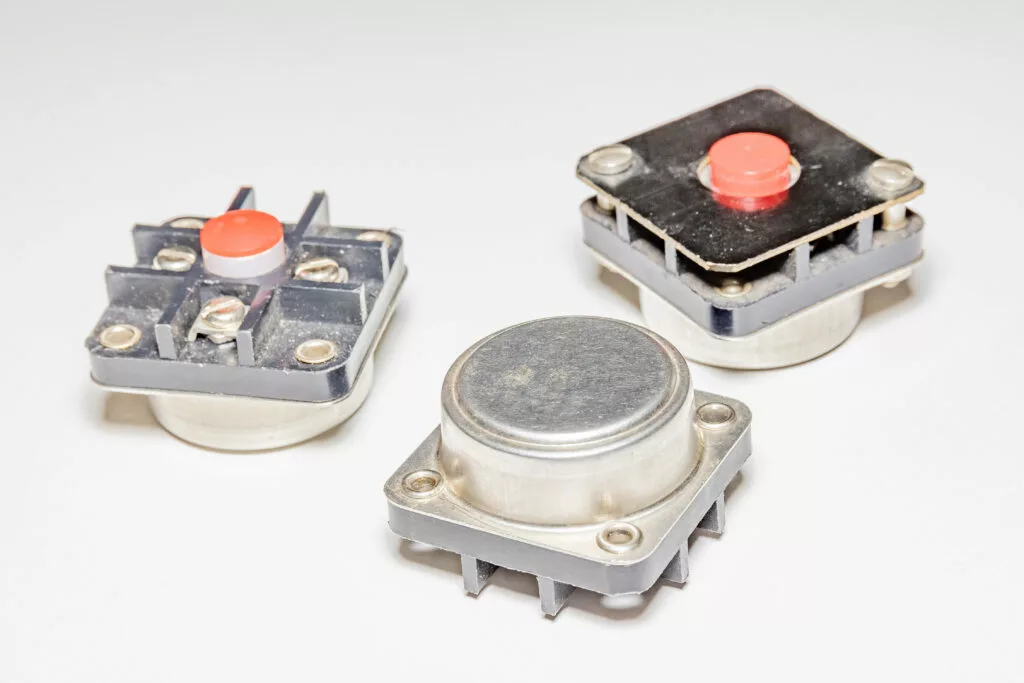
The use of the bimetal thermostat dates back several decades. This simple yet robust mechanical component allows an electrical circuit to be opened or closed once a defined temperature is reached.
Most thermostats available on the market offer a standard tolerance of ±5°C to ±10°C. For many applications, this range is sufficient; however, for others, it is simply not compatible with safety or performance requirements.
Achieving a ±1°C tolerance represents a real industrial challenge: the adjustment range becomes significantly narrower and requires much more precise calibration.
To better understand :
- A Vigitherme V16 with a 140°C opening (T5) triggers between 135°C and 145°C.
- The same thermostat in T3 triggers between 137°C and 143°C.
- With a ±1°C tolerance, the range is reduced to 139°C to 141°C, which represents an almost perfect level of precision.
Different Applications Requiring Different Levels of Precision
Bimetal thermostats are used across many industries, and the required precision strongly depends on the role the thermostat plays within the application.
Cases Where Standard Tolerance Is Sufficient
For general safety applications such as overheat cut-off, abnormally high temperature detection, or fire protection, the temperature rise is often so fast that the exact triggering point is not critical. In this type of use, a ±5°C tolerance may be sufficient.
However, thermal inertia must be considered: while the bimetal strip heats up and reacts, the external temperature may already have changed. The lower the tolerance, the earlier the thermostat triggers, reducing the risk of thermal overshoot.
Applications Where Precision Is Secondary
In contrast, in household appliances such as ovens, a wide tolerance is not a major issue. Once the cooking temperature is reached, the thermostat cuts the power, then resets the circuit when the temperature drops again. In this context, a wider switching range does not compromise the final use.
Ultra-Precise Use Cases: Medical, Military, Critical Equipment
Extreme Requirements in the Medical Sector
In certain medical machines, the bimetal thermostat plays a critical role as a final safety barrier.
A medical device injects fluid into the human body at a precisely controlled temperature. The main electronic system normally regulates this temperature. However, if the electronics fail, the bimetal thermostat must immediately cut the circuit if the temperature exceeds the critical threshold.
In this context, a deviation of only a few degrees can endanger the patient.
This is why a ±1°C tolerance is essential in such equipment. At Heito, our quality department performs multiple dedicated test series for these applications to ensure perfect repeatability and total safety.
Military and Sensitive Industrial Applications
In the military field, or in critical industrial environments, triggering precision is equally vital:
- Protection of embedded electronic equipment
- Emergency shutdown of sensitive systems
- Thermal control of high-responsibility devices
Here again, a wide tolerance would be unacceptable: only a narrow range guarantees the required reliability.
Precision Is Therefore a Highly Sensitive Parameter
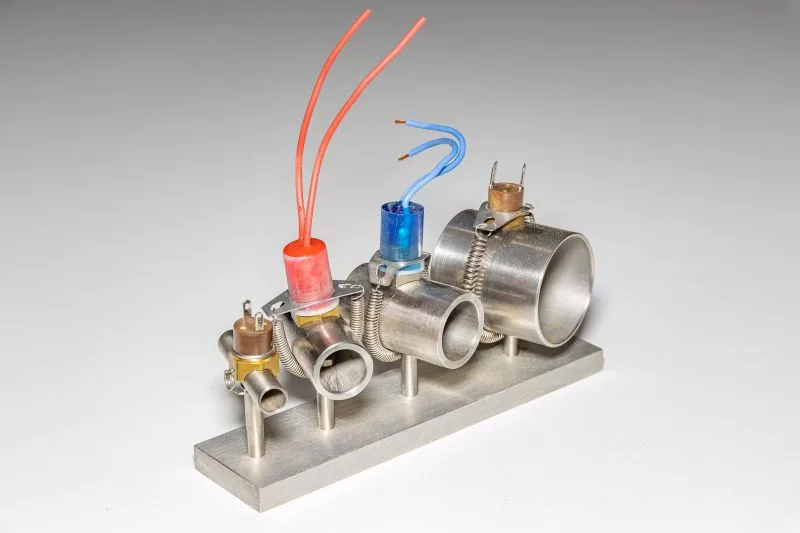
The bimetal thermostat is an extremely versatile component, capable of meeting both simple and highly demanding requirements.
However, its performance depends primarily on the selected tolerance:
- Too wide: it may compromise safety
- Too tight: it must be mastered by an experienced manufacturer
Heito has been manufacturing bimetal thermostats for nearly 70 years and remains attentive to its customers’ needs. Our design office needs a precise understanding of your application in order to guide you toward the most suitable tolerance and product range.
A good thermostat is not just a thermal switch: it is a key element in the safety and performance of your product.